3 min read
THE ART OF THE PIVOT

We've all seen that Friends episode - you know the one: "Pivot...PIVOT.....PIVOT!" as they try and manoeuvre the couch up the narrow stairs. In a...
4 min read
Core State Consulting
:
March 23, 2026
The term "polycrisis" has become the latest darling of the consulting world, used mostly to excuse poor planning as "unforeseeable." But when US-Iran tensions spike, the resulting supply chain shocks aren't a surprise—they are the inevitable result of fragile, outdated models. At Core State Consulting, we believe most "risk management" is just a box-ticking exercise that falls apart the moment a real crisis hits. We don't deal in generic forecasts; we specialise in Scenario Planning and Geopolitical Risk Management that actually prepares you for the "worst-case." We help boards stop treating global volatility as an external annoyance and start treating it as a core business variable. If you’re waiting for the world to "settle down" before you act, you’ve already lost your momentum.
As of March 2026, the Strait of Hormuz is effectively a no-go zone. With the US and Israel engaged in active strikes against Iranian nuclear and drone infrastructure, the "theoretical risk" of a Middle Eastern conflict has become a daily operational nightmare. According to the House of Commons Library (March 2026), shipping through this vital waterway—which handles 25% of global seaborne oil—has collapsed. Why? Insurance Rates for Tankers have gone through the roof! It’s not a military issue, it’s an economic one!
For many Australian C-suites, this felt like an "out of scope" problem until the fuel surcharges hit and the "just-in-time" components for their Q2 projects vanished. If your risk register lists "Middle East instability" as a low-probability, high-impact event requiring no immediate action, it is a decorative document, not a strategic one.
Consultants love to talk about resilience. They define it as the ability to "bounce back." We think that’s a losing strategy. In a polycrisis, there is no "back" to bounce to. The environment is permanently altered. There is no “back” to go to. The only way is forward.
The World Economic Forum’s Global Risks Report 2026 confirms that geoeconomic confrontation is now the top global risk. We are seeing the "weaponisation of economic tools" (sanctions, export controls, and energy blockades) become the primary theatre of war. When US Energy Secretary Chris Wright warns that "there are no guarantees" on oil prices (SBS News, March 2026), he is telling you that the old energy baseline is dead.
At Core State, we don't build resilient systems; we build Adaptive Systems. Resilience is defensive; adaptation is offensive. While your competitors are busy trying to "weather the storm," we help you redesign your Operating Model so you can thrive in the rain.
We’ve seen the big-four playbooks, and they are failing you. Here is why:
We don’t offer vague advice. We walk beside you to implement Transparency. When the world is in chaos, your internal strategy must be the anchor.
Energy isn't your only risk. Chatham House (March 2026) highlights that the Gulf region produces 40% of the world’s helium—essential for semiconductors—and a massive portion of synthetic fertilisers. We help you audit your entire value chain to uncover vulnerabilities your Tier 1 suppliers haven't disclosed. Let’s map it out to Tier 3 or even Tier 4. No one wants their suppliers to issue a “Force Majeure”.
If your growth strategy relies on stable global logistics while the world is on fire, you are misaligned. We run crisis simulations that aren't just "tabletop exercises." We pressure-test your Institutional Capability to see whether your team can make high-stakes decisions when data is incomplete and pressure is high.
In a crisis, the instinct is to sprint. Sprints lead to burnout. We help you establish a Sustainable Pace, so your leadership team can sustain the "orchestration" required for a long-term conflict. As Forbes (2026) rightly noted, leadership in this era requires "servanthood" and the ability to design environments in which intelligence is distributed rather than centralised.
The goal for 2026 is what HBR calls "permanent flexibility." We help you build Adaptive Planning cycles. This means moving from annual budgets to rolling forecasts and from fixed contracts to agile partnerships. We give you the Licence to Pivot.
The conflict in the Middle East is a tragedy, but for your business, it is a test of your Future-State Thinking. You can continue to view these events as "black swans" that excuse your missed targets, or you can accept that volatility is the new baseline.
Core State Consulting brings the senior, lived experience of people who have managed government responses to COVID-19 and global supply chain collapses. We don’t give you a report; we give you a new way of working.
The world isn't going to get simpler. Your strategy needs to get sharper.
Let’s find your Core State.
3 min read
We've all seen that Friends episode - you know the one: "Pivot...PIVOT.....PIVOT!" as they try and manoeuvre the couch up the narrow stairs. In a...
4 min read
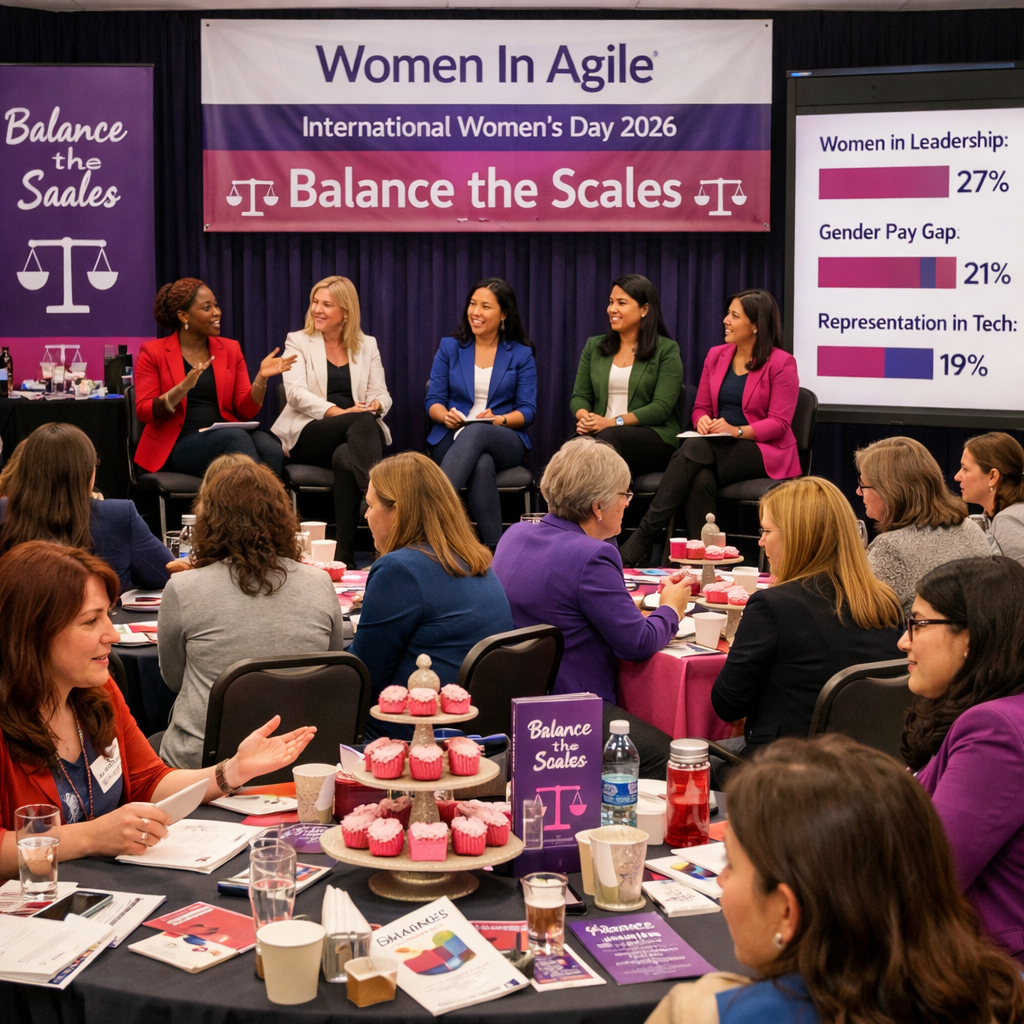
The IWD likability trap When I spoke at the Women In Agile event for IWD this year, I was trying to be open to change and wanted to acknowledge...
3 min read
Why 2026 demands geopolitical rehearsals "Polycrisis" isn't a buzzword anymore, it's the baseline for 2026. Between shifting critical mineral...