4 min read

Why your "inclusion" strategy is failing female leaders

Why your

The IWD likability trap


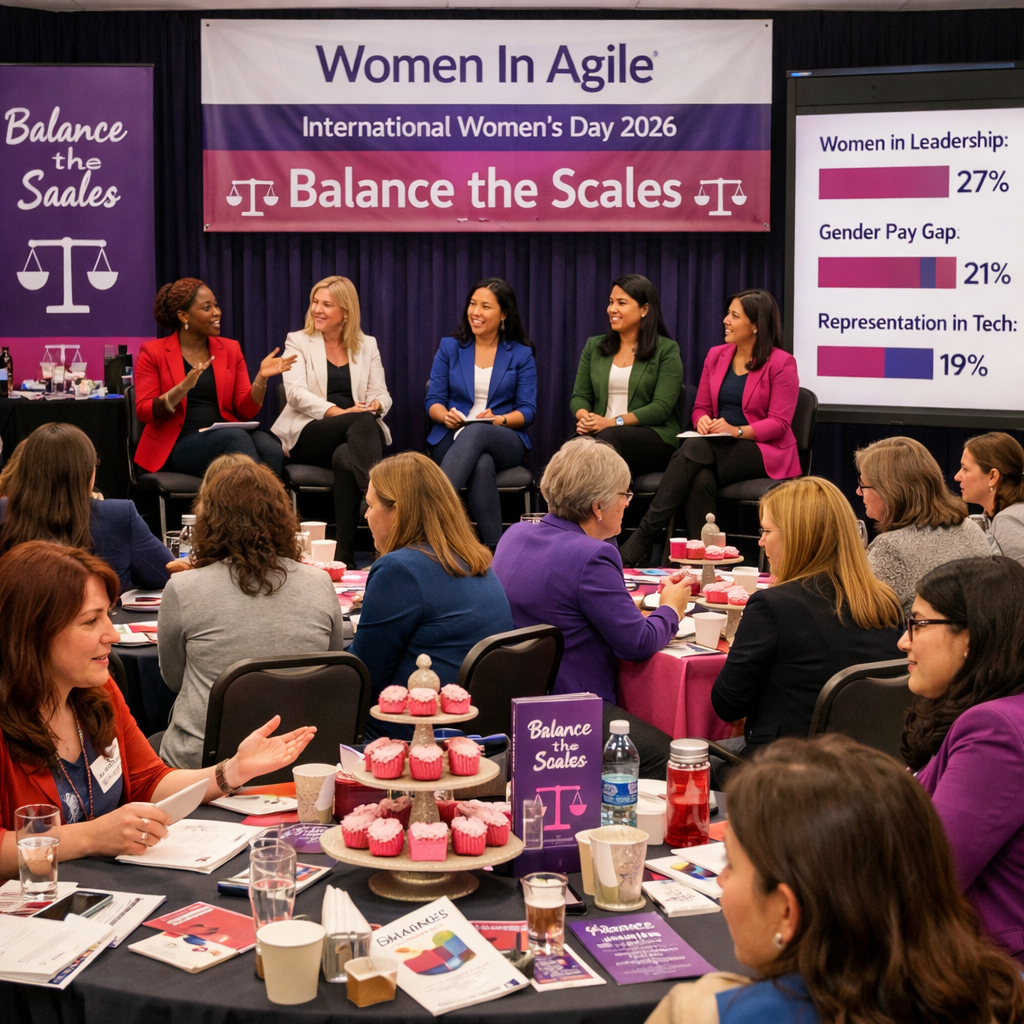
When I spoke at the Women In Agile event for IWD this year, I was trying to be open to change and wanted to acknowledge that change takes time. But after speaking with attendees and other women over the course of the week, I have come to the conclusion that most International Women’s Day (IWD) initiatives are little more than corporate performance—pink cupcakes and platitudes that ignore the structural friction that female leaders actually face. As we reflect on IWD 2026, themed "Balance the Scales" by UN Women Australia, the corporate world is still largely failing to move the needle where it matters: the C-suite and the boardroom.

The reality is that "office politics" isn't a level playing field; it’s a system that still frequently penalises women for the very decisiveness it rewards in men. At Core State Consulting, we have no interest in surface-level diversity metrics that look good in an annual report but change nothing on the ground. We view this as an Operating Model failure.

The data doesn't lie, but it does disappoint


Despite the flurry of LinkedIn posts every March, the numbers tell a story of stagnation. The WGEA 2025 Gender Equality Scorecard reveals that while the share of women in key management roles rose to 39%, the number of women CEOs remains stuck at 22%. Even more damning, the gender pay gap for CEOs actually increased to 26.2% in the last 12 months.

In 2026, we are still seeing what researchers call the "passion double standard." A study recently featured in HBR and UCLA Anderson found that men are 20% to 30% more likely than women to be labelled as "high potential," even when performance is identical. Why? Because when a man shows passion, he is "diligent"; when a woman does, she is "emotional."

This isn't just a social issue; it’s an expensive inefficiency. According to the World Economic Forum, advancing women’s employment could add $12 trillion to global GDP. Yet businesses continue to leave this value on the table because they manage people, not systems.

The likability trap is an operating failure


The "likability trap" is the invisible tax every woman who dares to lead with authority pays. If she is strong, she’s abrasive. If she is empathetic, she’s weak. This isn't a "women's problem" to be solved with more mentoring or "leaning in." It is a structural flaw in how your organisation defines leadership. Why are we still setting the leadership capability “standards” based on a fundamentally un-psychologocially safe, un-friendly, and un-balanced approach to work? When will we realise the value of the more feminine leadership traits of empathy, engagement, and emotional connection? We need to change the system!

At Core State, we don't believe in fixing the woman to fit the broken system. We believe in fixing the system. Our own system is hyper inclusive! It has to be….why?

I AM A WOMAN!

Why should other organisations not be so inclusive of alternative leadership models? When we partner with a business, we examine the Ways of Working that enable these biases to thrive. Here's some examples of the systemic bias that need to be faced:


Challenge

The "Male" Perception

The "Female" Perception

The Core State View

Negotiating

Strategic & Ambitious.

Asking for more budget is seen as a commitment to the mission.

Demanding or "Difficult."

Asking for the same resources is often viewed as a lack of team spirit.

Negotiating is a Business Skill, not a personality trait. We standardise resource allocation to remove this bias.

Disagreement

Candid & Strong.

Pushing back on a bad idea is seen as protecting the business.

Abrasive or "Not a team player."

Directness is often misread as a lack of "soft skills."

We implement Transparency protocols where candour is the expected baseline for everyone.

Handling Failure

Accountable.

Admitting a mistake is seen as "extreme ownership" and leadership.

Emotional or Under-qualified.

Admitting a mistake can trigger "imposter syndrome" labels from others.

We build Institutional Capability through blameless post-mortems focused on the system, not the person.

Delegation

Efficient.

Letting go of the weeds is seen as "empowering the team."

Distanced or "Lazy."

If a woman isn't "doing the work" alongside the team, she’s seen as losing touch.

We move to Asynchronous Work where delegation is tracked by outcomes, removing the "visibility" bias.

Confidence

Visionary.

Speaking with absolute certainty is seen as inspiring.

Aggressive or Unlikable.

High confidence in women is frequently met with a "likability" penalty.

We value Shared Momentum. True confidence comes from data and alignment, not volume or posturing.


We see three specific areas where "standard" approaches fail:

  1. The Mentorship Myth: Most firms offer "mentoring," which is essentially just advice. We focus on Sponsorship—where leaders with power use their social capital to actively move others into the room where decisions are made.
  2. Subjective Performance: If your promotion criteria include "executive presence" or "cultural fit," you have built a playground for bias. We help you move to objective, outcome-based metrics.
  3. The Glass Cliff: Research shows women are more likely to be promoted to leadership roles during periods of crisis, setting them up for failure (the "Glass Cliff" phenomenon). We build Institutional Capability so that leadership transitions are based on strategic alignment rather than crisis management.

How we "Balance the Scales"

We don't do "awareness training." It doesn't work. Instead, we work beside your senior team to implement a Core State—the most stable, high-performing version of your organisation.

Here are the 4 steps we take to dismantle the likability trap:

  • Audit the unwritten rules

We identify the "shadow politics" in your office. Who gets the plum assignments? Who gets interrupted in meetings? We use Radical Clarity to bring these hidden dynamics into the light.

  • Redesign the Operating Model

We bake equity into your processes. This means standardising how discretionary pay and bonuses are awarded—the area where WGEA data shows the widest gap (men earn 60% more in discretionary payments).

  • Move to Asynchronous Accountability

Bias thrives in "watercooler" politics. By moving to more Asynchronous Work and transparent project tracking, we ensure that performance is judged on delivered value, not on who is most "likable" at the Friday drinks.

  • Build Sustainable Pace

We help you move away from the "always-on" culture that disproportionately penalises those with caring responsibilities. We help you find a Sustainable Pace that keeps your best talent from burning out.

Stop the performance, start the transformation

If your IWD strategy ends with a breakfast event, you aren't leading; you’re play-acting.

True transformation is a fundamental shift in leadership and culture. It requires the courage to admit that your current "meritocracy" might just be a mirror of your own biases. At Core State Consulting, we provide Insider Insight to help you see the white space and reimagine what’s possible.

Don't just celebrate women once a year. Build an organisation where they can actually lead without being asked to tone it down.

Let’s find your Core State.


Takeaway Summary

  • The Problem: The IWD 2026 theme of "Balance the Scales" highlights a persistent gap in CEO representation and a widening pay gap at the top.
  • The Trap: Women are still penalised for leadership traits (passion/decisiveness) that are rewarded in men. Why are we still playing these games? Why are the traits of empathy, support, engagement and balance celebrated as well?
  • The Solution: Stop trying to "coach" women out of a systemic issue. Redesign the Operating Model to remove subjective bias and reward objective impact.
  • The Result: A leaner, more profitable, and genuinely equitable business that doesn't rely on "cheap" corporate performance.

References:

  • UN Women Australia (2026), "Balance the Scales" IWD Theme.
  • WGEA (2025), "Gender Equality Scorecard 2024-25".
  • Harvard Business Review (2025), "The Passion Double Standard".
  • World Economic Forum (2026), "Global Gender Gap Report".
  • Forbes (2025), "Women’s Political Power Faced a Fractured Year".


2 min read

DESIRE PATHS

Desire Paths: The Hidden Dynamics of Your Organisation In every organisation, there's an invisible map of how work truly gets done. While official...

Read More

3 min read

THE ART OF THE PIVOT

We've all seen that Friends episode - you know the one: "Pivot...PIVOT.....PIVOT!" as they try and manoeuvre the couch up the narrow stairs. In a...

Read More

1 min read

EMBRACING KINTSUGI: PROACTIVE PROBLEM SOLVING IN LEADERSHIP

The Japanese art of Kintsugi, or "golden joinery," is a powerful metaphor for leadership in today's complex world. It is the practice of repairing...

Read More